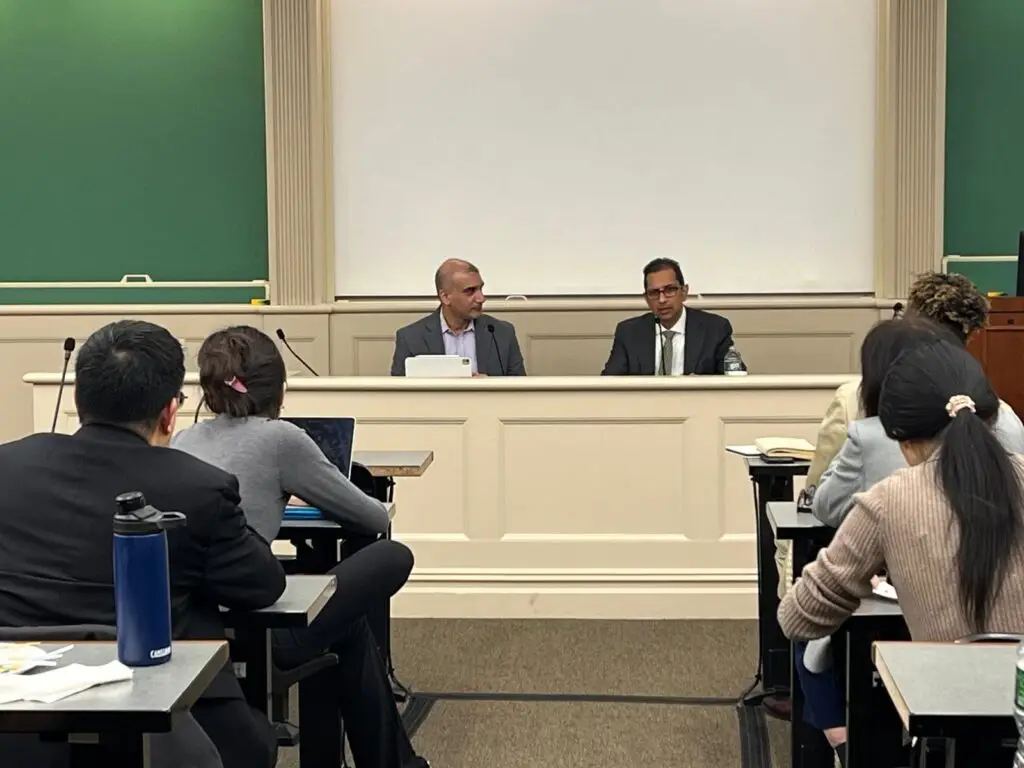
February 25, 2026 – New York – Immigration attorney Vishal Chander, Principal and Founder of The Chander Law Firm, P.C., spoke as a panelist during a three-hour Continuing Legal Education (CLE) program presented by the New York Chapter of the American Immigration Lawyers Association (AILA) on H-1B practice. The program was presented to immigration lawyers who are members of the AILA New York Chapter.
The CLE was designed to teach newer practitioners the fundamentals of H-1B practice and to prepare experienced practitioners for the upcoming H-1B registration period, which typically begins each March.
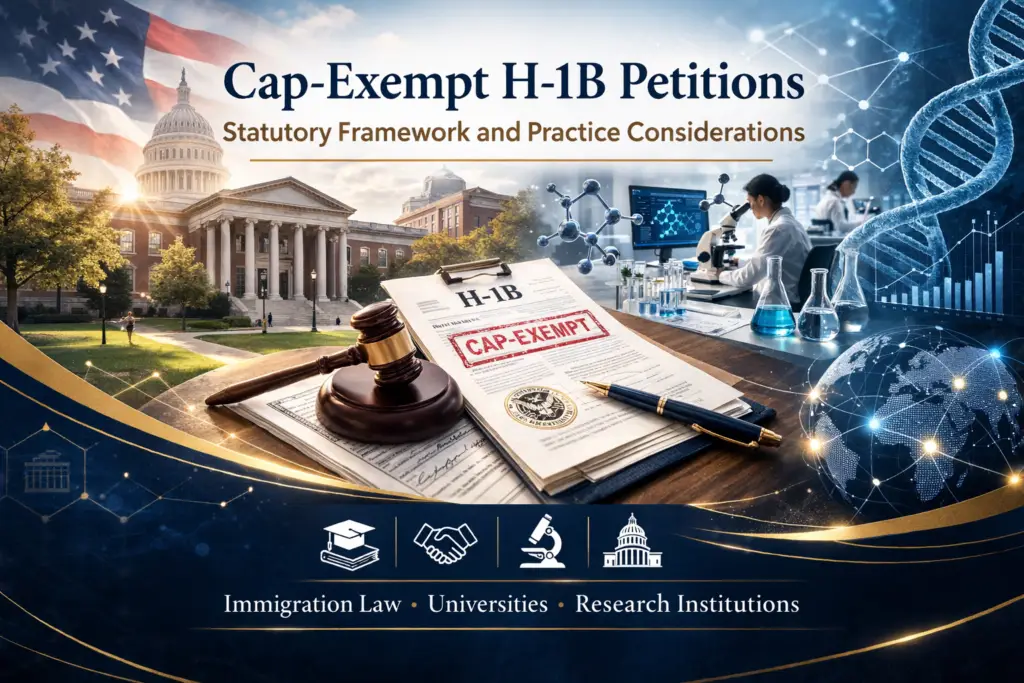
Mr. Chander presented on the more advanced topic of cap-exempt H-1B entities, a complex area of employment-based immigration law that allows certain employers to sponsor H-1B workers outside of the annual H-1B lottery.
During his presentation, Mr. Chander reviewed the statutory framework governing cap-exempt H-1B petitions, including the categories established under INA §214(g)(5). These exemptions apply to beneficiaries employed by:
- Institutions of higher education
- Nonprofit entities related to or affiliated with institutions of higher education
- Nonprofit research organizations
- Governmental research organizations
The presentation also addressed the regulatory framework for demonstrating affiliation with institutions of higher education, including shared ownership or control, operation by a university, attachment as a branch or subsidiary, or the existence of a formal written affiliation agreement establishing an active research or educational relationship.
Mr. Chander further discussed recent regulatory developments affecting cap-exempt H-1B petitions, including clarifications introduced by the H-1B modernization regulations, which updated the definition of nonprofit research organizations and provided additional guidance regarding third-party placement at qualifying institutions.
Additional topics covered during the CLE included:
- The “employed at” standard, which allows certain workers placed at qualifying universities or research institutions to qualify for cap exemption
- Documentation strategies for establishing the required nexus between an H-1B worker’s duties and the mission of a qualifying institution
- Risks associated with concurrent cap-subject employment when a worker’s cap-exempt position ends
- Practical considerations when transitioning from cap-exempt to cap-subject H-1B employment
The program formed part of AILA New York’s ongoing effort to provide professional education to immigration practitioners and ensure that attorneys remain informed about developments in employment-based immigration law.
Mr. Chander regularly speaks on immigration law topics and advises universities, nonprofit organizations, and employers on complex employment-based immigration matters, including cap-exempt H-1B petitions, physician immigration, and research-institution sponsorship.