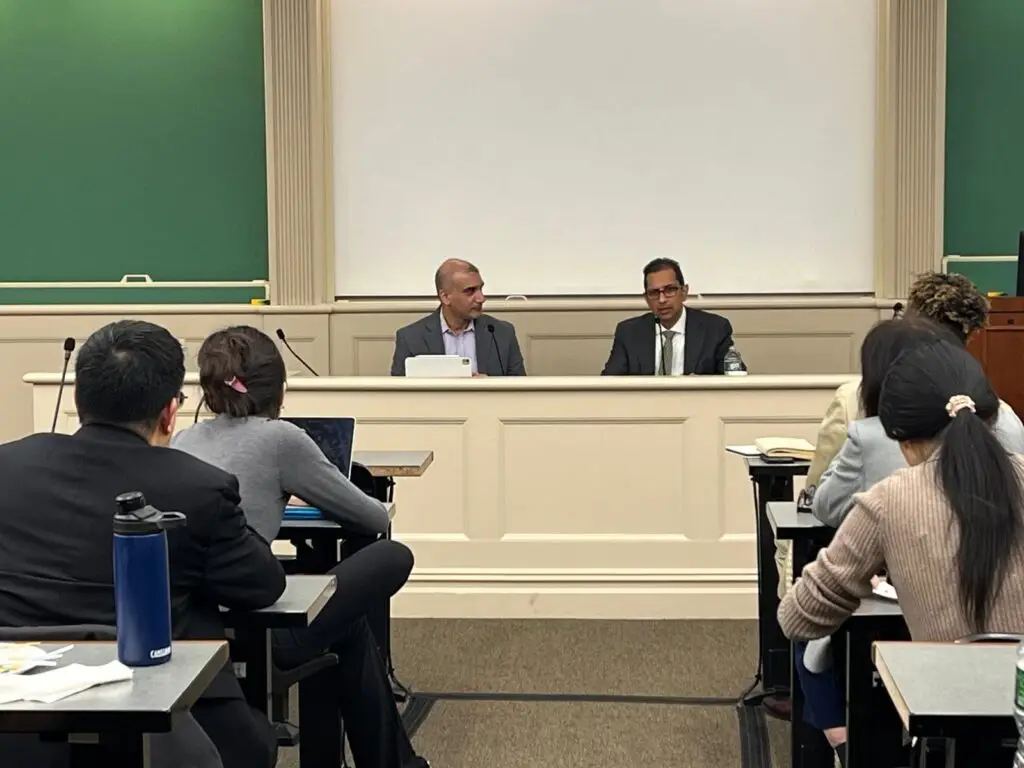
On March 3, 2026, Vishal Chander, Founder and Principal of The Chander Law Firm PC, led a continuing legal education (CLE) course with Hasan Shafiqullah, Immigration Supervising Attorney of The Legal Aid Society of New York on current immigration and enforcement trends and ethics at New York University (NYU) School of Law. Mr. Chander led the discussion in his capacity as co-chair of the Issues Committee of the Asian American Bar Association of New York (AABANY) in partnership with the NYU Asian Pacific American Law Students Association (NYU APALSA) and other bar associations.
Hasan Shafiqullah is one of the leading nonprofit voices in immigration law. Mr. Shafiqullah’s frontline experience in removal defense and federal immigration litigation provided a critical lens into how enforcement priorities are evolving and how those changes are affecting immigrant communities across New York and nationwide.
As moderator, Mr. Chander guided the discussion through a structured CLE program addressing both current immigration court developments and professional responsibility considerations.
Immigration Court Practice and Federal Litigation Developments
The program focused on major developments shaping immigration court practice and enforcement proceedings.
Among the issues discussed:
- The expansion of expedited removal and its broader implications beyond traditional border contexts, including increased enforcement activity at or near immigration courts and check-in appointments.
- The use of case pretermission and threshold eligibility findings that may limit full record development before immigration judges.
- Restrictive custody and bond determinations, including the application of INA §§ 236(c) and 235(b) and the consequences for detained individuals.
- Third-country removal mechanisms, including Safe Third Country Agreements and Asylum Cooperative Agreements, and the due process concerns raised when individuals are transferred without full judicial review.
- The continued importance of Article III courts, including the use of habeas petitions to challenge detention and to enforce statutory and constitutional limits on agency action.
These topics underscored the complexity of modern immigration litigation and the strategic considerations facing advocates in both immigration courts and federal courts.
Student Activism, Bar Admission, and Ethical Responsibilities
The second portion of the program examined the intersection of immigration enforcement, student activism, and professional responsibility.
The discussion addressed:
- Enforcement actions affecting F-1 students, including SEVIS terminations and visa revocations linked to protest activity.
- The limited procedural protections available to noncitizen students facing status termination.
- Character and fitness implications for law students with protest-related arrests.
- The ethical duties of competence, diligence, and supervision in high-stakes immigration practice.
- The importance of attorney well-being and sustainability in demanding advocacy environments.
By integrating litigation realities with ethics and career considerations, the program provided both doctrinal depth and practical guidance for attorneys and students navigating today’s immigration landscape.
A Collaborative Effort
This program was made possible through the support of numerous co-sponsoring organizations: AABANY, NYU APALSA, South Asian Bar Association of New York (SABANY), South Asian Indo Caribbean Bar Association of Queens (SAICBA-Q), Korean American Lawyers Association of Greater New York (KALAGNY), and the Filipino American Lawyers Association of New York (FALA New York).
A number of AABANY committees collaborated to help bring the event to life: Government Service and Public Interest Committee (GSPI), Immigration Committee, Intellectual Property Committee, Pro Bono Committee, Student Outreach Committee, and Young Lawyers Committee.
The Chander Law Firm is proud to support initiatives that promote legal education, professional responsibility, and meaningful dialogue within the immigration law community.
We thank Mr. Shafiqullah for sharing his expertise and all attendees for contributing to a substantive and engaging discussion.